Kana Calligraphy: Separate What the Poem Says from How It Occupies the Page
Read a poem fragment and a Genji album as arrangements of writing without confusing visual description with translation.
What can a viewer notice in kana calligraphy before being able to read the Japanese?
Historical and collection documentation only. No current exhibition, admission, opening-hours, price or authenticity claim.
Reading is not the only kind of attention
Without knowing the language, you can still describe where calligraphy goes on a page. The Metropolitan Museum of Art explains that kana signs render Japanese syllables and discusses their arrangement as visual composition. That distinction leaves two tasks: understanding the words and examining their placement.
Sources: K1
Begin with a simple inventory: the positions of the columns, their relative lengths and the spaces between them. Record these without assigning feelings to the writer. A translation can later correct your understanding of the words; it need not erase an accurate observation about their placement. The aim is to keep the two kinds of attention in conversation.
Try the poem and the page separately
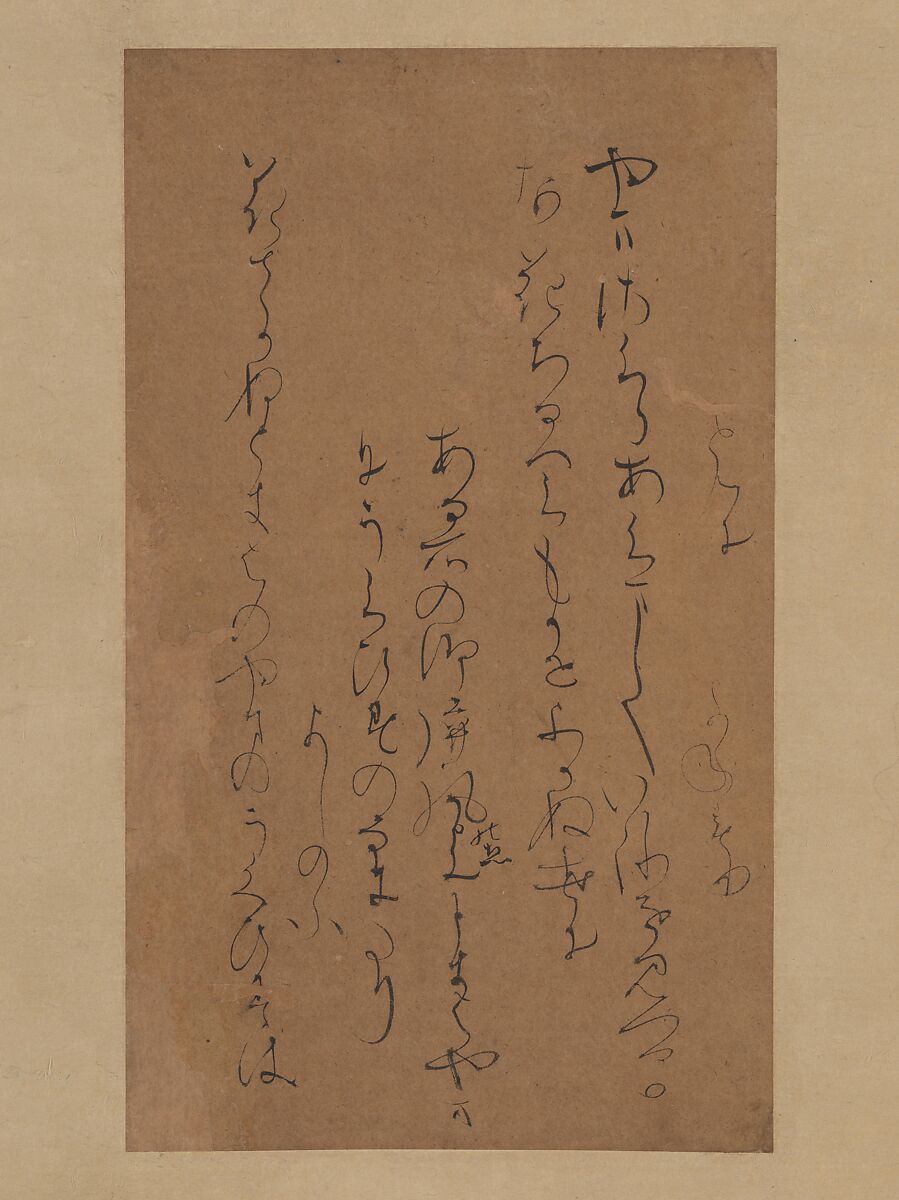
The Met dates its Reikashū cherry-blossom poem fragment to the late eleventh century and describes it as written mainly in kana. Its published translation imagines the blossoms in a world without wind to scatter them. This is information about the poem’s content. The same record identifies the surviving object as a hanging scroll, reminding us to distinguish the written sheet from its mounting.
Sources: K3
In a separate essay, the museum specifically calls attention to the dynamic arrangement of the Reikashū fragment’s columns. Compare that observation with the reproduction: where do lines start and stop, and which intervals seem larger? Do not assume that the line breaks in an English translation reproduce the visual divisions of the Japanese sheet.
Sources: K1
A familiar text can become a new composition
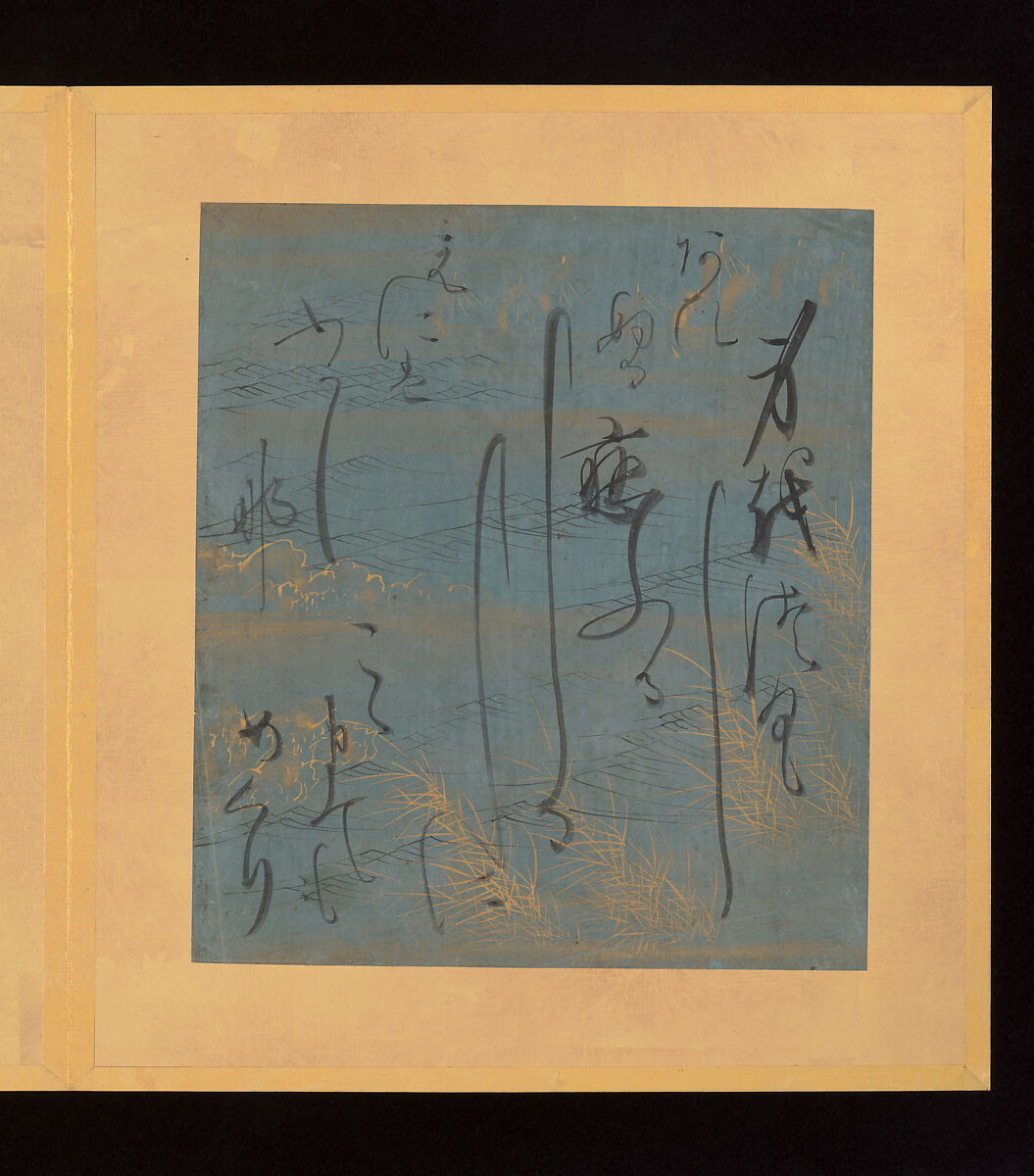
A second Met example is an early seventeenth-century pair of albums combining Tale of Genji scenes with inscriptions by Ono Ozū, also known as Ono no Tsū. The paintings belong to the Tosa school; the text and pictures occupy decorated poetry cards mounted in albums. The object therefore offers more than an isolated sample of beautiful handwriting: its writing shares a larger presentation with images.
Sources: K2
The museum describes Ozū’s adaptation of scattered writing and her emphatically extended vertical strokes. Here the comparison is between established wording and a particular composition. Identifying the passage would not, on its own, predict the positions, spacing or lengths that give this version its visual character.
Sources: K1
Make a description that admits its limits
Write one sentence beginning “The translation tells me…” and another beginning “The arrangement shows…”. If you cannot substantiate the first, leave it unfinished until you consult a reliable translation. For the second, favour precise spatial observations over claims about temperament, speed or private emotion. You can look closely without pretending that looking has made you fluent.